
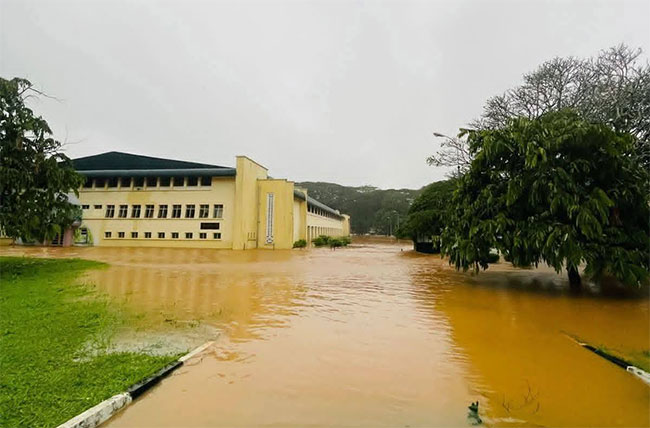
Sri Lankan Prime Minister Dr. Harini Amarasuriya has assured full government support to restore the University of Peradeniya after severe flooding caused extensive damage to the country’s largest and oldest university.
The Prime Minister visited the Peradeniya campus to assess the impact of floods that struck on 27 November, meeting student representatives and heads of affected departments. The visit was aimed at personally inspecting the damage to academic buildings, student facilities, and critical infrastructure, according to a statement from the Prime Minister’s Office.
University officials reported significant losses across several key faculties, including Management, Agriculture, and Veterinary Medicine. Major campus facilities such as the Information Technology Centre, the Continuing and Distance Education Centre (CDCE), the gymnasium, swimming pool, and sports grounds were also badly affected.
The disaster severely disrupted academic activities and campus life, with more than 110 computers, essential laboratory equipment, examination documents, and four central IT servers destroyed. Preliminary estimates place the total damage at over Rs. 6 billion (approximately USD 20 million).
Dr. Amarasuriya commended the authorities for the rapid evacuation of nearly 750 students from hostels located along the Mahaweli River and praised the resilience of almost 11,000 students who remained on campus during the emergency. She also expressed appreciation to the Sri Lanka Army, the Disaster Management Centre, and local donors for providing food, drinking water, and other essential supplies when access and communications were severely disrupted.
A joint team of engineers has confirmed that campus buildings remain structurally sound, although several require urgent repairs. Academic activities at the university have been suspended until 15 December.
During discussions with the Vice Chancellor and emergency response teams, the Prime Minister outlined immediate and long-term measures to support recovery. These include restoring essential services such as water and electricity, ensuring safe access routes for students, fast-tracking repairs to heavily damaged faculties and laboratories, strengthening flood early-warning systems, and implementing long-term risk reduction measures such as riverbank protection, improved drainage, and relocation of vulnerable facilities.
Reaffirming the government’s commitment, Dr. Amarasuriya directed relevant agencies to expedite assistance and assured the university community that full state support will be provided to rebuild and safeguard the University of Peradeniya.